Michelangelo Most Famous Artwork Renaissance Wonder
- 1.
“So… did Michelangelo ever have an off day?”
- 2.
The Sistine Ceiling: Not Just a Fancy Paint Job
- 3.
David: The Teen Who Could Stare Down Giants
- 4.
Pietà: Where Grief Gets a Face
- 5.
The Last Judgment: Heaven, Hell, and One Angry Artist
- 6.
Was the “Only Known Artwork” a Myth?
- 7.
Architectural Genius: When Stone Learned to Soar
- 8.
Michelangelo’s Sketchbooks: Where Magic Started
- 9.
The Rivalry with Leonardo: Florence’s Ultimate Showdown
- 10.
Michelangelo’s Legacy: More Than Just Marble
Table of Contents
michelangelo most famous artwork
“So… did Michelangelo ever have an off day?”
Picture this: a dude in a dusty Florentine studio, muscles tensed like he just wrestled a marble slab into submission—again. That’s Michelangelo for ya. And no, he probably never had a “meh” day. Every chisel strike, every brushstroke, every groan of artistic agony gave birth to something that still makes us go “woah” five centuries later. When folks ask about michelangelo most famous artwork, they’re usually thinking of one or two jaw-dropping pieces—but the truth? The man’s whole body of work reads like a Renaissance blockbuster trilogy with bonus scenes. From the Vatican to Florence, his legacy pulses through cobblestone alleys and vaulted ceilings. And while we might crack jokes about his “only known artwork” (spoiler: there’s way more than one), his genius was anything but a fluke. Nah, it was sweat, faith, and stubbornness stitched together with divine inspiration… or maybe just really good coffee.
The Sistine Ceiling: Not Just a Fancy Paint Job
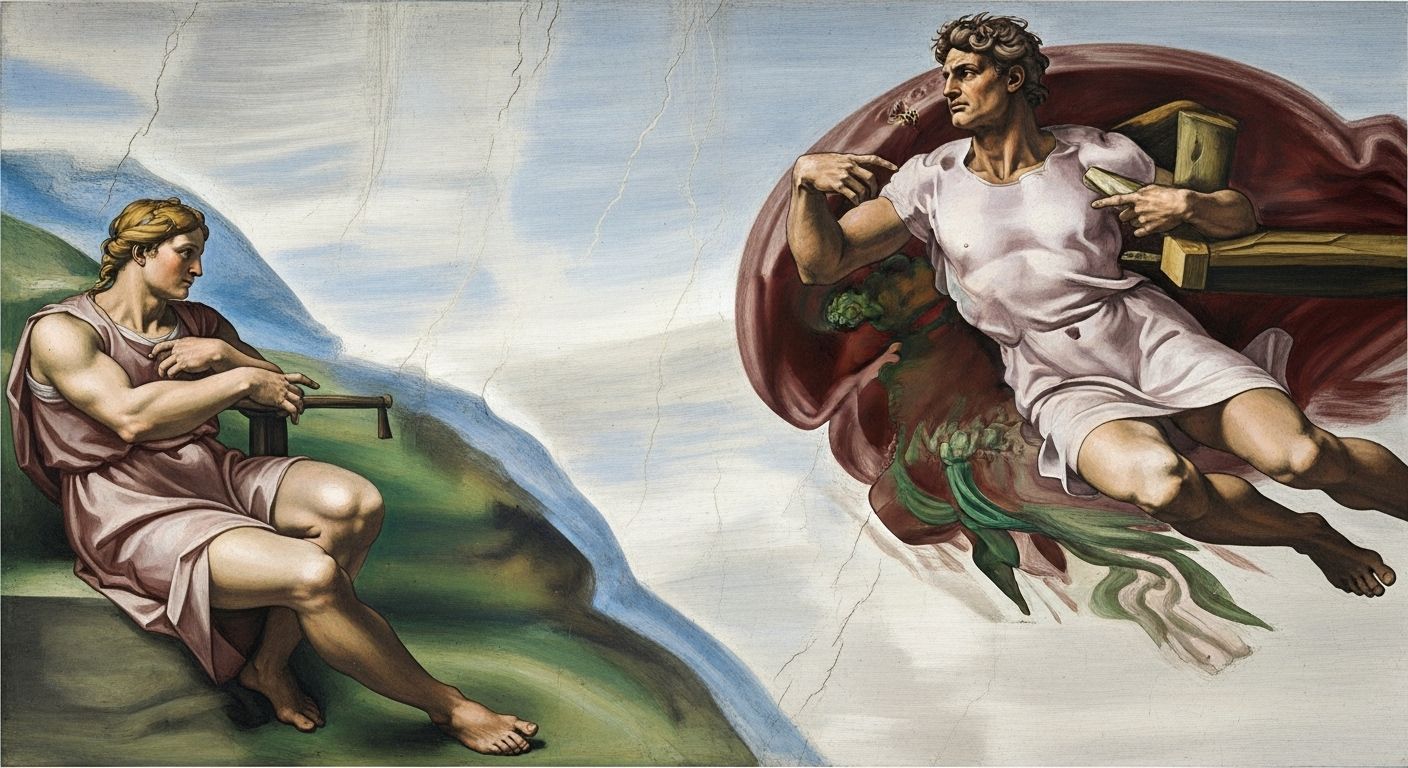
When you hear michelangelo most famous artwork, the Sistine Chapel ceiling probably floats into your brain like a slow-mo angel descending from the clouds. And honestly? Fair. Painted between 1508 and 1512, this ceiling ain’t just paint on plaster—it’s theology, anatomy, drama, and flexing rolled into one. Michelangelo didn’t even wanna do it at first. “I’m a sculptor, not a painter,” he reportedly grumbled. But Pope Julius II basically said, “Too bad, buddy—you’re doing it.” So for four years, Mikey lay on his back, neck cricked, eyes burning from fresco lime, and gave us over 300 figures depicting everything from Creation to the Flood. The Creation of Adam alone? That fingertip-to-fingertip moment? That’s the OG “connection” meme. And it’s all part of the michelangelo most famous artwork conversation because—let’s be real—it’s basically the Mona Lisa of ceilings.
David: The Teen Who Could Stare Down Giants
Before he was immortalized in marble, David was just a biblical underdog with a slingshot. Then Michelangelo came along and turned him into an 17-foot-tall symbol of Florentine swagger. Completed in 1504, this michelangelo most famous artwork in sculpture form doesn’t just flex biceps—it flexes civic pride. Fun fact: the marble block had been sitting around for *decades*, rejected by other sculptors as “too flawed.” But Michelangelo saw a giant killer in that junky stone. Locals in Florence still call it “Il Gigante”—the Giant—even though David’s technically a teen. And get this: when they unveiled it, crowds didn’t just clap—they *wept*. That’s the power of michelangelo most famous artwork done right: it doesn’t just sit there; it *breathes*.
Pietà: Where Grief Gets a Face
If you wanna talk emotional gut-punches, look no further than the Pietà. Carved when Michelangelo was only 24 (yeah, you read that right—24!), this sculpture shows Mary cradling the dead Christ with a calm so deep it hurts. What makes this piece part of the michelangelo most famous artwork pantheon? It’s the only sculpture he ever signed. Legend says he overheard someone credit it to another artist, so he snuck back into St. Peter’s Basilica at night and carved “MICHAELA[N]GELUS BONAROTUS FLORENTIN[US] FACIEBA[T]” across Mary’s sash. Petty? Maybe. Iconic? Absolutely. And don’t let the serene surface fool you—this piece is raw. Mary’s face is young, almost too young, because Michelangelo believed “chastity preserves youth.” That kind of poetic logic? Pure michelangelo most famous artwork energy.
The Last Judgment: Heaven, Hell, and One Angry Artist
Twenty-five years after the Sistine ceiling, Michelangelo returned to the same chapel—but this time, he wasn’t painting angels. He was painting *reckoning*. The Last Judgment, covering the altar wall, is chaotic, intense, and honestly kinda terrifying. Bodies twist, saints hold their own flayed skin (looking at you, St. Bartholomew), and Christ judges with zero chill. Critics hated it. They called it “disgraceful” and “shameless.” Some even demanded it be censored (which, eventually, they did—adding fig leaves and loincloths in what’s now known as the “Fig-Leaf Campaign”). But Michelangelo didn’t care. He was 60-something, cranky, and done playing nice. This mural? It’s his middle finger to perfection—and yet, it’s still counted among michelangelo most famous artwork because it’s raw truth wrapped in divine drama.
Was the “Only Known Artwork” a Myth?
Here’s a hot gossip from art history class: someone once floated the idea that Michelangelo only made *one* known artwork. Bless their heart—they were wildly off. The man produced hundreds of drawings, dozens of sculptures, multiple architectural masterpieces (hello, St. Peter’s Basilica dome!), and enough poetry to fill a small library. So when folks ask, “What is the only known artwork Michelangelo ever made?”—well, they’re either trolling or misinformed. Every surviving sketch, every unfinished “slave” statue, every architectural plan drips with intention. And while some pieces are lost to time, enough remain to prove that michelangelo most famous artwork isn’t a single thing—it’s a whole universe. Even his “failed” pieces? They’re studied like sacred texts. That’s the mark of a legend.
Architectural Genius: When Stone Learned to Soar
Okay, so maybe you know Michelangelo as a painter or sculptor—but did you know he basically redesigned the Roman skyline? As chief architect of St. Peter’s Basilica in his later years, he reworked Bramante’s original plan into something more harmonious, more *him*. The dome? That’s all Mikey. Inspired by Brunelleschi’s Florence Cathedral but bolder, grander, more celestial. He never saw it completed (they finished it after he died), but when you stand under it today, you feel like you’re inside a stone halo. This isn’t just engineering—it’s spiritual geometry. And though it doesn’t always make the “michelangelo most famous artwork” highlight reel, it’s arguably his most *influential* contribution. Churches for centuries copied that dome like it was the Renaissance iPhone.
Michelangelo’s Sketchbooks: Where Magic Started
Before marble became David, it was just… stone. And before the Sistine Chapel dazzled, it was just blank plaster. But in between? There were sketches. Hundreds of them. Michelangelo’s drawings—studies of limbs, drapery, facial expressions—are where the michelangelo most famous artwork alchemy began. He’d obsess over tendon placement, shadow angles, the way cloth folds over a knee. Some scholars say his drawings are artworks in their own right (and honestly, they’re not wrong). These weren’t just prep work—they were prayers in charcoal. And today, museums guard them like dragon’s gold. Why? Because they show us the messy, human side of a god-like talent. Even geniuses start with a doodle.
The Rivalry with Leonardo: Florence’s Ultimate Showdown
Imagine two Renaissance rockstars in the same city, at the same time, painting rival battle scenes in the same town hall. That was Florence, circa 1504: Michelangelo vs. Leonardo da Vinci. Leo was the cool, calm, scientific type. Mikey? Hot-headed, intense, all heart. They respected each other… kinda. But mostly, they roasted each other like it was an Olympic sport. Michelangelo once mocked Leonardo for failing to cast a giant horse statue (it melted). Leonardo called Michelangelo “crude” for his obsession with muscles. But here’s the twist: that rivalry pushed both to new heights. And while neither mural survived, the tension fueled the fire behind what would become michelangelo most famous artwork. Sometimes, a little healthy (or unhealthy) competition is all genius needs to ignite.
Michelangelo’s Legacy: More Than Just Marble
So, what *is* Michelangelo’s greatest achievement? Is it the Sistine Chapel? David? The Pietà? Honestly—it’s the fact that 500 years later, we’re still arguing about it. His work didn’t just influence art; it redefined what art *could be*. Human, divine, flawed, perfect—all at once. And today, his fingerprints are everywhere: from comic book heroes (looking at you, Teenage Mutant Ninja Turtles) to modern sculpture to the way we talk about “genius.” If you visit SB Contemporary Art, you’ll see echoes of his drama in contemporary pieces. Dive into the View section, and you’ll spot his shadow in every bold line. Or read our deep dive on Michelangelo Best Paintings Eternal Masterpieces for more on how his vision still pulses in today’s studios. Because michelangelo most famous artwork isn’t just history—it’s living, breathing inspiration.
Frequently Asked Questions
What is Michelangelo's most famous piece of artwork?
Most folks point to the Creation of Adam on the Sistine Chapel ceiling as michelangelo most famous artwork—that iconic image of God and Adam almost touching fingers. But don’t sleep on David or the Pietà; they’re equally legendary in sculpture. Ultimately, it depends on whether you’re team painting or team marble—but either way, you’re staring at genius.
What was Michelangelo's masterpiece?
Art historians often debate this, but many agree the Sistine Chapel ceiling is Michelangelo’s magnum opus. Spanning over 5,000 square feet and featuring more than 300 figures, it redefined sacred art. That said, his David is considered the perfect embodiment of Renaissance humanism. So really, his michelangelo most famous artwork has multiple crown jewels.
What is the only known artwork that Michelangelo ever made?
That’s actually a myth! Michelangelo created *many* known artworks—sculptures, paintings, architecture, even poetry. The confusion might come from the fact that the Pietà is the only piece he ever signed. But in reality, dozens of his works survive, and they all contribute to the legacy of michelangelo most famous artwork.
What is Michelangelo's greatest achievement?
While opinions vary, Michelangelo’s greatest achievement might be how he fused physical realism with spiritual depth. Whether in the Sistine Chapel or the dome of St. Peter’s Basilica, he made stone and paint *feel* alive. His ability to capture human emotion—and elevate it to the divine—cements michelangelo most famous artwork as timeless.
References
- https://www.metmuseum.org/art/collection/search?artist=Michelangelo
- https://www.vatican.va/various/cappelle/sistina_vr/index.html
- https://www.britannica.com/biography/Michelangelo
- https://www.getty.edu/art/collection/artists/1103/michelangelo-buonarroti-italian-about-1475-1564/